When selling your home can still bring a Capital Gains Tax bill
Most people pay no tax on the profit from selling their main home. Letting, a second home, long absences or large grounds can change that, and any tax due must be reported and paid within 60 days.
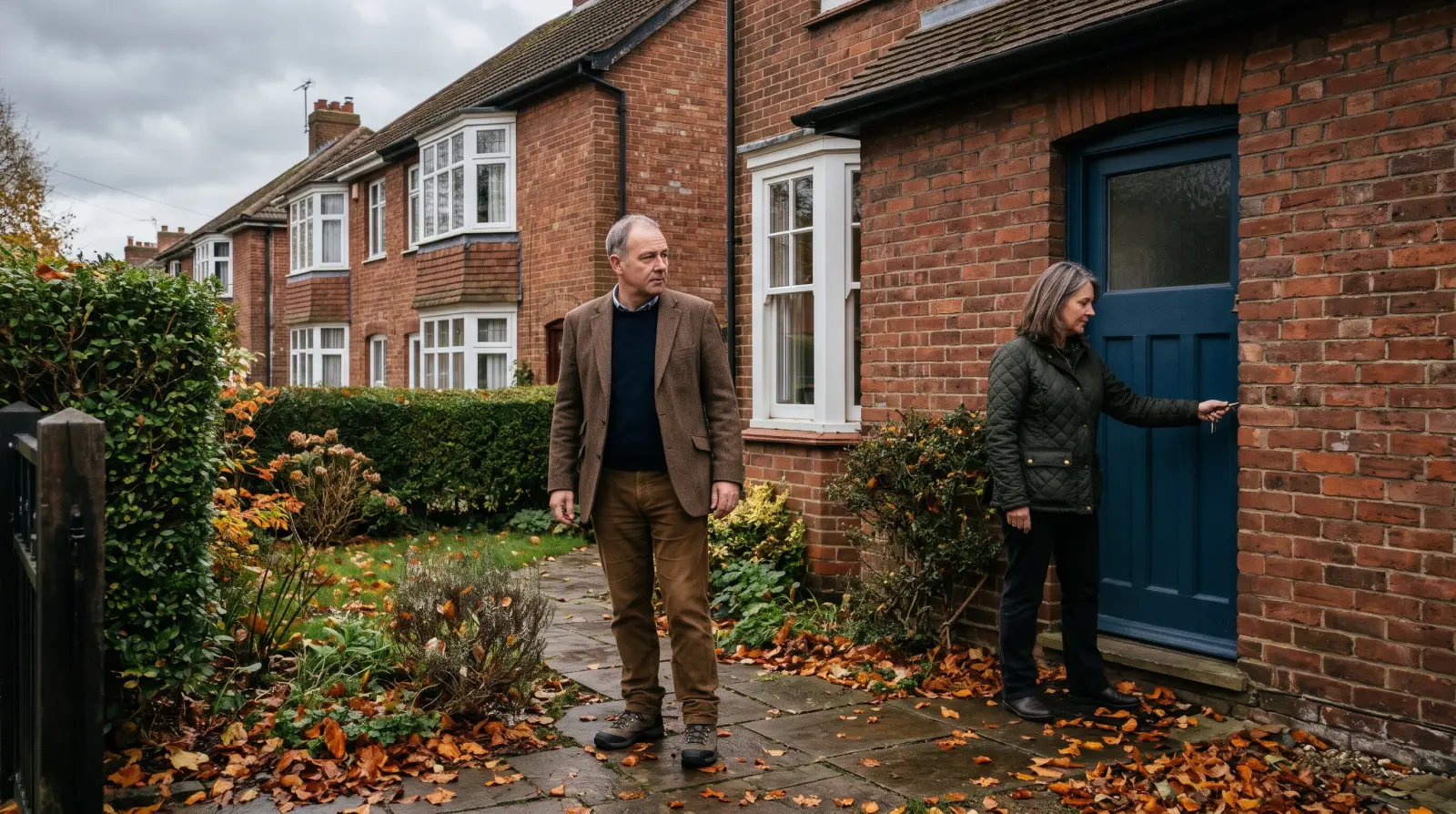
The estate agent’s board has gone up outside a terraced house that has been home for twenty years, and the buyers have a mortgage offer. Then a friend asks a question nobody had thought about: didn’t you let the place out for a few years when you worked away? For most people selling the home they live in, there is no tax to pay on the profit. For some, the history of the property means part of the gain falls outside that rule.
Why most home sales are tax-free
The profit on selling a main home is normally covered by Private Residence Relief. HMRC’s guidance says full relief applies, and no Capital Gains Tax is due, when all of the following are true: the seller has one home and has lived in it as their main home for the whole time they owned it; no part of it has been let out (a lodger does not count as letting); no part has been used exclusively for business; the grounds, including all buildings, are less than 5,000 square metres in total; and the property was not bought just to make a gain.
The questions start when one of these conditions does not fit.
The situations that can bring a bill
Letting all or part of the home. If the whole property was let while the owner lived elsewhere, the months of letting are generally not covered. If the owner lived in the home at the same time as a tenant, a separate Letting Relief may apply. GOV.UK says it is the lowest of three figures: the Private Residence Relief already given, £40,000, or the gain on the part that was let.
Exclusive business use. A room used only for business does not qualify for relief. A spare room that is sometimes a study and sometimes a guest bedroom does not stop full relief, according to HMRC’s helpsheet HS283.
Large grounds. Gardens and grounds up to half a hectare (about one acre) are covered in full. Where the land is bigger, relief is limited to a “permitted area”, which HMRC determines with the District Valuer.
Second homes. Only one property can be a main home at any time. A holiday cottage or a weekday flat is usually outside the relief unless it is the one treated as the main residence.
Time away that can still count
Being away from home does not automatically mean losing relief. HS283 sets out periods of absence that can be treated as if the owner lived there: up to 3 years in total for any reason, any period working in a job with all duties outside the UK, and up to 4 years where the distance from work, or an employer’s requirement, meant the owner could not live at home. In most cases the property needs to have been the main residence at some point before and after the absence, and there are detailed conditions in the helpsheet.
The last 9 months of ownership always qualify, as long as the home was the owner’s only or main residence at some point. HMRC says the final 36 months can qualify for disabled people and people living in a care home, where they have no other relevant interest in a home.
“The last 9 months of ownership always qualify, as long as the home was the owner’s only or main residence at some point.”
Two homes, couples and the two-year window
People who have more than one home at the same time can choose which one counts as their main residence. HMRC says this nomination has to be made within 2 years of first having that combination of homes, and a new 2-year period starts if the combination changes, for example when another property is bought.
Married couples and civil partners who are not separated can only have one main residence between them.
Filled square: the next date. Days are recalculated every day from today’s date; past dates are shown in grey.
A worked example with one let period
Helen bought a flat in 2010 and lived in it for 10 years. She then moved in with her partner and let the flat out for the remaining 6 years before selling it in 2026. She did not return to live there, so the let period does not count as an absence, and she never shared the flat with a tenant. The figures are invented and simplified.
| Illustrative example, figures invented | Amount |
|---|---|
| Bought in 2010 | £150,000 |
| Sold in 2026 | £310,000 |
| Gain before relief | £160,000 |
| Months owned | 192 |
| Months covered (120 lived in plus final 9) | 129 |
| Months not covered | 63 |
| Gain left after relief (63/192 of £160,000) | £52,500 |
Illustrative example only. It ignores buying and selling costs, improvement works and any other reliefs, all of which affect a real calculation.
From the remaining £52,500 the annual tax-free allowance (£3,000 for 2026/27) would be taken off. For 2026/27, GOV.UK gives Capital Gains Tax rates of 18% on gains that fall within the basic rate Income Tax band and 24% above it. If all of Helen’s taxable gain of £49,500 fell in the higher band, the tax would be £11,880. If part of it fitted into her unused basic rate band, part would be taxed at 18% instead. Our article on how tax on the State Pension is collected explains how pension income uses up the tax bands.
Reporting and paying within 60 days
When Capital Gains Tax is due on the sale of UK residential property, GOV.UK says it must be reported and paid within 60 days of completion of the sale. The report is made through HMRC’s Capital Gains Tax on UK property account on GOV.UK, or on a paper form for people who cannot use the online service. Interest and penalties can apply if the report or payment is late.
A UK resident does not need to make a 60-day report if no tax is due, for example when the gain is fully covered by Private Residence Relief or falls within the tax-free allowance. Non-residents are treated differently: they must report every sale of UK property within the deadline, even when there is no tax to pay. Reporting is done directly with HMRC and costs nothing; this website takes no information or payments.
- Anyone who let the whole home, or part of it, at any time while they owned it.
- Owners with a room used only for business, or grounds larger than half a hectare.
- People who owned two homes at once, and whether a main-residence nomination was made within 2 years.
- Couples who each owned a property before marrying or forming a civil partnership.
- The completion date, because the 60-day clock starts there, not at exchange.
The point to take away
For a seller who has only ever lived in one home as a home, the gain is usually tax-free and nothing needs reporting. Letting, a second home, long absences or large grounds can change that, and any tax due has a 60-day deadline after completion. HMRC’s helpsheet HS283 and the GOV.UK property reporting service are the official places to check, and families dealing with a parent’s property after a death may also find our guide to when probate is needed and what it costs useful.
Official sources
- GOV.UK — Tax when you sell your home · Conditions for full Private Residence Relief, 5,000 square metres, one main home for couples
- GOV.UK — HS283 Private Residence Relief (2026) · Final 9 months, 36 months, absences, 2-year nomination, half a hectare, business use, Letting Relief
- GOV.UK — Capital Gains Tax: what you pay it on, rates and allowances · 18% and 24% rates and £3,000 allowance for 2026/27
- GOV.UK — Report and pay Capital Gains Tax on UK property · 60-day reporting and payment deadline, who must report
This is private, sponsored general information from B.B.R. Finance OÜ on thepowertodomore.com. It is not a communication from the Department for Work and Pensions (DWP), the Pension Service or HM Revenue & Customs (HMRC), and this website is not affiliated with them or with any other government body. It is not personal financial, tax or legal advice. Amounts and examples are illustrations, not a promise of any payment, refund or saving; they were checked on against the official sources listed and can change. This website takes no applications, arranges no products and charges no fees. Never give your National Insurance number, bank details or Government Gateway / GOV.UK One Login credentials to a website because you have read an article. For your own State Pension, tax or benefits, use the official services on GOV.UK.
 THE MONEY DIARY
A short email on Monday: which tax, banking and household dates are coming up, what has changed and one rule explained with its official source. Free, and you can unsubscribe at any time.

 TAX

 PENSIONS & PAYMENTS