Why tax on the State Pension usually comes out of your other income
The State Pension is taxable but paid without tax deducted. HMRC usually collects any tax through another pension or job, and uses a Simple Assessment letter when the State Pension is the only income.

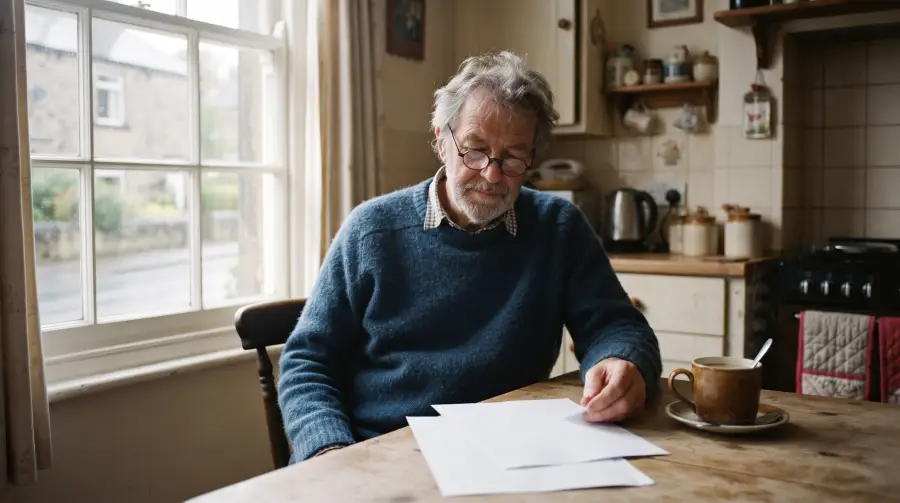
The first payslip from Pat’s small workplace pension was a puzzle. The pension itself was modest, yet the tax taken from it looked far too high for the amount being paid. Pat’s State Pension, meanwhile, arrived every four weeks with no tax deducted at all. The two facts are connected, and the explanation lies in how HMRC collects tax on the State Pension.
Taxable, but paid without tax taken off
The State Pension counts as taxable income. GOV.UK says people usually pay tax on income from pensions, “this includes your State Pension”, and that the amount depends on total income in the tax year. Tax is due on income above the Personal Allowance, which for the 2026/27 tax year (6 April 2026 to 5 April 2027) is £12,570.
What makes the State Pension different is that it is paid gross. GOV.UK says it “is not taxed before you receive it”, so any tax owed on it is collected some other way.
For reference, the full new State Pension for 2026/27 is £241.30 a week, or £12,547.60 over 52 weeks. That is £22.40 below the Personal Allowance. The rates are set out in how the April State Pension rise changed weekly payments. Some people receive more than the full rate, for example because of additional pension built up under the old system or extra pension from deferring their claim.
Why the tax shows up on another payslip
For someone who also has a workplace or private pension, or still works, HMRC usually collects the tax due on the State Pension through that other income. GOV.UK explains that the person will “usually pay more tax” on the pay or private pension “to include any tax you need to pay on your State Pension”, by adjusting the tax code used under PAYE.
In effect, the State Pension uses up most or all of the Personal Allowance, and the tax on it is taken from the other payment. Where there is more than one pension or job, GOV.UK says only one of them will take the tax for the State Pension. If too much is taken, it can be reclaimed from HMRC.
A worked example
The table follows three invented pensioners in England using the 2026/27 Personal Allowance of £12,570 and the basic rate of 20%. Income tax bands differ in Scotland, so the figures would not be the same there.
| Illustrative example, figures invented | Pat | Jean | Alan |
|---|---|---|---|
| State Pension for the year | £11,000 | £12,800 | £12,000 |
| Workplace pension | £6,000 | £0 | £0 |
| Total income | £17,000 | £12,800 | £12,000 |
| Income above £12,570 | £4,430 | £230 | £0 |
| Tax at 20% for the year | £886 | £46 | £0 |
| How it is usually collected | Through the workplace pension | Simple Assessment | Nothing to collect |
Invented round figures for illustration only. England, Wales and Northern Ireland rates for 2026/27; no other income, reliefs or allowances assumed.
Pat’s £886 is all taken from a £6,000 workplace pension, which is why the deduction looked so large. It is the tax on both pensions combined, collected from the one payment that can carry it.
“The State Pension uses up most of the Personal Allowance, and the tax on it is taken from the other payment.”
When the State Pension is the only income
Jean has no workplace pension and no job, so there is nothing for a tax code to work on. GOV.UK says that when the State Pension is someone’s only income and it is above the Personal Allowance, HMRC sends a Simple Assessment tax bill showing how much is owed and how to pay it. Below the allowance, as for Alan, there is usually no tax to pay.
HMRC’s guidance says a Simple Assessment may be issued when someone owes tax for a previous tax year that cannot be collected through a tax code, when they need to pay tax on their State Pension, or when they have other untaxed income. People who already fill in a Self Assessment return include their State Pension on it instead.
Filled square: the next date. Days are recalculated every day from today’s date; past dates are shown in grey.
What the PA302 letter shows, and how to query it
The Simple Assessment bill is known as a PA302. It arrives by post or in the person’s HMRC online account, and it sets out how much tax is owed, how it was calculated and which income was included. GOV.UK suggests checking the calculation; useful records to compare it with include the State Pension award or uprating letter and any pension statements.
If something looks wrong, the person contacts HMRC within 60 days and asks it to check the figures again. If HMRC sends a revised bill for the same year, it shows the total for that year, and only the difference from anything already paid is due.
Paying a Simple Assessment
For the 2025/26 tax year, GOV.UK says a letter received before 31 October 2026 must be paid by 31 January 2027. A letter received on or after 31 October 2026 must be paid within three months of the date on the letter. The bill can be paid in one go or in smaller instalments, as long as the full amount is cleared by the deadline.
Payment goes directly to HMRC online, by bank transfer or by cheque, using the 14-character reference beginning with “X” printed on the letter. Using the wrong reference can delay a payment. A text or email asking for payment through a link should be treated with suspicion; what happens after a bank transfer scam explains the protections if money has already gone to a fraudster.
The change announced for 2027/28
The full new State Pension is close to the Personal Allowance, and the Budget of November 2025 addressed this directly. It said the government “will ease the administrative burden for pensioners whose sole income is the basic or new State Pension without any increments so that they do not have to pay small amounts of tax via Simple Assessment from 2027-28 if the new or basic State Pension exceeds the Personal Allowance from that point”. It added that the government was exploring the best way to achieve this and would set out more detail.
Three points matter. The commitment applies from 2027/28, not to the current year. It covers people whose only income is the basic or new State Pension without increments, so anyone with additional pension, deferral extras or other income is outside it as worded. And at the time of writing, late October 2026, HMRC’s guidance on how tax on the State Pension is paid had not yet described how it will work. Simple Assessment rules for 2025/26 and 2026/27 are unchanged.
Who this matters for, and what to check
- The yearly State Pension amount on the award or uprating letter, which is the figure HMRC uses.
- Whether a workplace or private pension payslip shows a change after the State Pension starts.
- Any PA302 letter: the income listed, the calculation, and the 60-day window to query it.
- The payment deadline printed on the letter and the reference beginning with “X”.
- For people abroad, the different rules in moving abroad with a State Pension.
The point to keep in mind
The State Pension is taxable but arrives without tax deducted. Where there is other pension or earned income, the tax is usually collected through it, which can make that other payslip look heavily taxed. Where the State Pension is the only income and it goes over £12,570, HMRC uses a Simple Assessment, and the 2027/28 easement announced in the 2025 Budget is still awaiting detail. Queries and payments are made directly with HMRC, free of charge.
Official sources
- GOV.UK — Tax when you get a pension: how your tax is paid · State Pension not taxed before it is received; tax collected through other pension or pay; Simple Assessment when it is the only income.
- GOV.UK — Understand your Simple Assessment tax bill · PA302, who receives one, letter by post or online account, revised bills.
- GOV.UK — Pay your Simple Assessment tax bill · 60 days to query, 31 January 2027 and three-month deadlines, payment reference and methods.
- HM Treasury — Budget 2025 · Section 5.10: State Pension and Simple Assessment from 2027-28.
This is private, sponsored general information from B.B.R. Finance OÜ on thepowertodomore.com. It is not a communication from the Department for Work and Pensions (DWP), the Pension Service or HM Revenue & Customs (HMRC), and this website is not affiliated with them or with any other government body. It is not personal financial, tax or legal advice. Amounts and examples are illustrations, not a promise of any payment, refund or saving; they were checked on against the official sources listed and can change. This website takes no applications, arranges no products and charges no fees. Never give your National Insurance number, bank details or Government Gateway / GOV.UK One Login credentials to a website because you have read an article. For your own State Pension, tax or benefits, use the official services on GOV.UK.
 THE MONEY DIARY
A short email on Monday: which tax, banking and household dates are coming up, what has changed and one rule explained with its official source. Free, and you can unsubscribe at any time.
 PENSIONS & PAYMENTS

 TAX