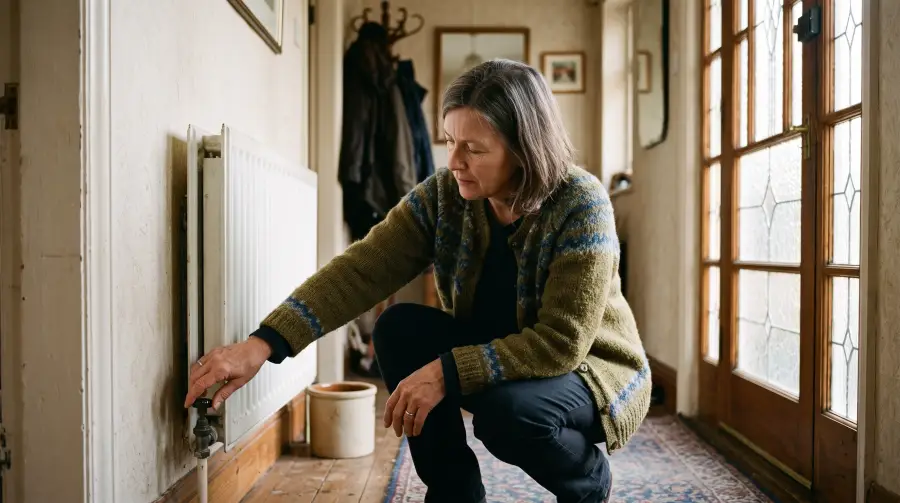
The council grant that can pay for a stairlift or a level-access shower
A Disabled Facilities Grant can pay up to £30,000 in England towards adaptations such as stairlifts, ramps and level-access showers. The council assesses the need and must decide within six months.
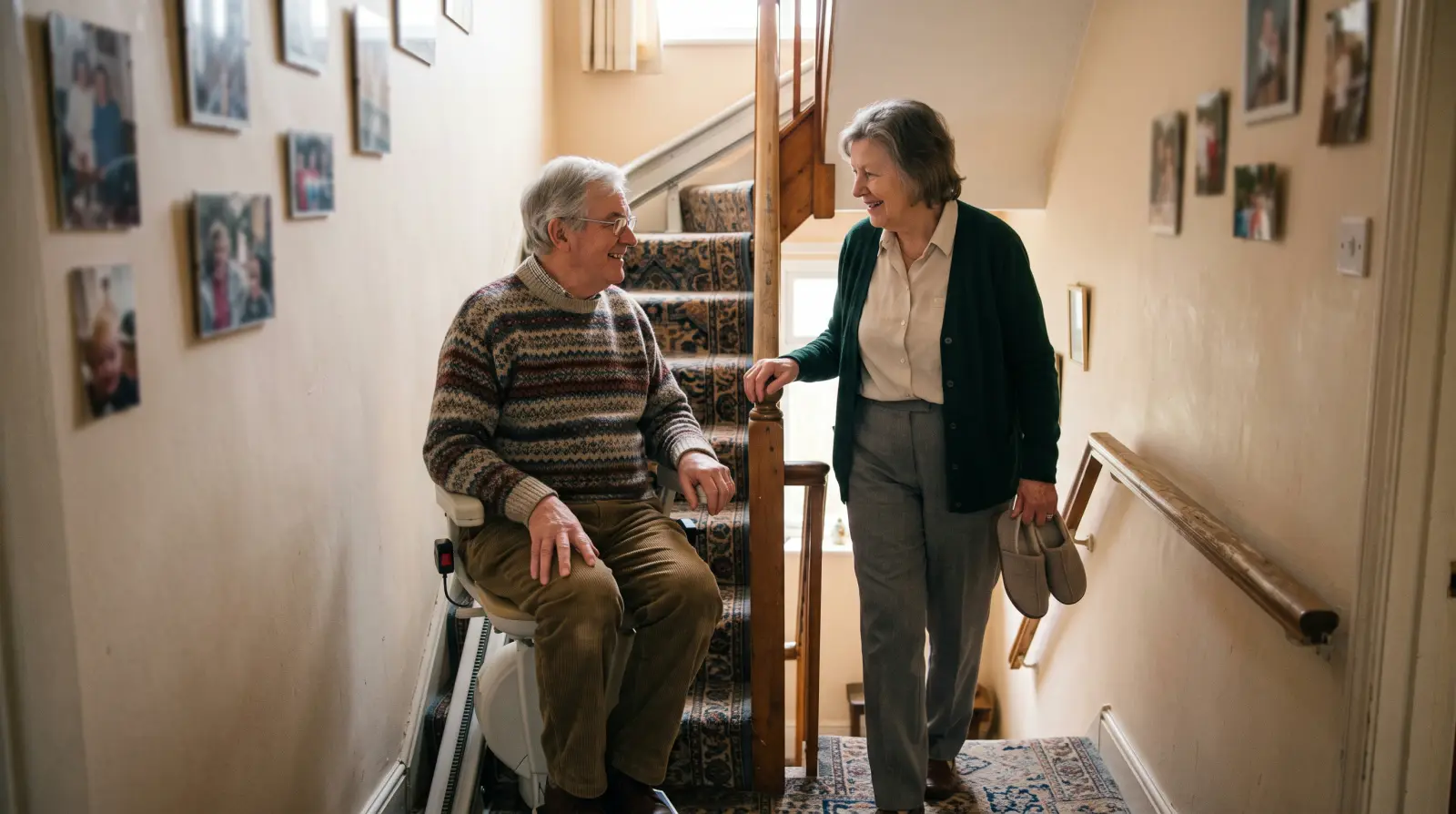
The stairs in Brian’s semi-detached house had never been a problem until his knee operation. Months later, he was still going up to bed one step at a time, with his wife, Carol, a step behind him. A bath with a shower over it had become something to dread. Their daughter had looked up stairlift prices online. What none of them knew was that their council has a duty to consider grant applications for exactly this kind of work, and that the process starts with an assessment, not a quote.
What a Disabled Facilities Grant is for
A Disabled Facilities Grant, usually shortened to DFG, is money from the local council towards changes to a home so that a disabled person can continue to live there. GOV.UK lists examples of what it can pay for:
- widening doors and installing ramps or grab rails;
- improving access to rooms and facilities, for example with a stairlift or a level-access shower;
- improving access to and from the garden;
- building an extension, such as a downstairs bedroom;
- providing a heating system suited to the person’s needs;
- adapting heating or lighting controls so they are easier to use.
The grant is not limited to physical disability. GOV.UK says it may also suit people with learning disabilities, age-related needs, autism, dementia, progressive or terminal illness, or mental health conditions. A DFG does not affect any benefits a person receives.
How much the grant can be in England
In England, a DFG can be up to £30,000. That limit was set by the Disabled Facilities Grants (Maximum Amounts and Additional Purposes) (England) Order 2008 and has not changed since. Some councils can and do give more, using their own discretionary powers, so the local policy is worth reading.
The limit has been under review. In its consultation response on DFG funding, updated on 17 February 2026, the government said it had undertaken a review of the upper limit and was “currently considering the right approach for the future”. As of 28 October 2026 no change to the £30,000 limit had been announced. Separately, the government confirmed £723 million of national DFG funding for 2026/27, shared between councils under a new allocation formula.
Who can apply
An application can be made where the applicant, or someone living in the property, is disabled. The applicant must be the owner, a tenant or a landlord, and must intend the disabled person to live in the property during the grant period, which is usually five years. The period can be shorter, for example where the person is terminally ill.
The council also has to agree that the work is necessary and appropriate for the disabled person’s needs, and reasonable and practicable given the age and condition of the property.
The means test, and why children are different
For adults, the grant is means tested. The council looks at the household’s income and savings, and GOV.UK says savings over £6,000 are taken into account. Depending on the result, the applicant may be asked to pay towards the cost of the work, and the grant covers the rest up to the limit.
The rule is different for children. Where the disabled person is under 18, a grant can be made without the parents’ income being taken into account. Landlords applying on behalf of a disabled tenant are not means tested either, although the council may ask that the property is let to another disabled person if the tenant moves out within five years.
“The process starts with an assessment, not a quote.”
The assessment and the six-month decision
Applications go to the local council. GOV.UK says the council may send an occupational therapist or a trained assessor to see what changes the home needs. In many areas, the first contact is with the council’s adult social care or housing team, and the assessment comes before the formal grant application.
Once a full application has been made, the council must give a decision within six months. That deadline is set in section 34 of the Housing Grants, Construction and Regeneration Act 1996, which requires the council to say in writing whether the application is approved or refused. Planning permission or building regulations approval, where needed, are applied for separately. The council may ask for an architect or surveyor to plan and oversee the work, and the grant can include their fees.
Help with the paperwork is available. GOV.UK points to Foundations, the government-funded national body for home improvement agencies, and many areas have a local agency that helps people apply and manage the work. Applying is free; this website takes no applications.
Filled square: the next date. Days are recalculated every day from today’s date; past dates are shown in grey.
Why the work should not start early
The single most important practical rule is about timing. GOV.UK warns that someone might not get any grant if work on the property starts before the council approves the application. Once approved, the work should normally be finished within 12 months.
Payment can be made in instalments as the work progresses or in one sum at the end, either to the contractor directly or to the applicant, as agreed at approval. It usually follows once the council is satisfied with the work or receives the contractor’s invoice. If an applicant appeals against a decision and remains unhappy, the next step is a complaint to the Local Government and Social Care Ombudsman.
Illustrative example: three adaptations, three outcomes
The table shows how the limit and a means-tested contribution can interact. The households, costs and contributions are invented; real contributions come from the council’s means test.
| Illustrative example, figures invented | Cost of work | Assessed contribution | Grant |
|---|---|---|---|
| Brian, level-access shower | £8,000 | £0 | £8,000 |
| Margaret, stairlift and front ramp | £12,000 | £2,500 | £9,500 |
| Sam, aged 9, downstairs bedroom and bathroom extension | £45,000 | not means tested | up to £30,000 |
Illustrative example only. All names and figures invented. In the last line, the £15,000 above the England limit would need another source, such as any discretionary help the council offers.
Wales, Scotland and Northern Ireland
The figures above apply to England. GOV.UK says a Disabled Facilities Grant can be up to £36,000 in Wales and up to £25,000 in Northern Ireland. Disabled Facilities Grants are not available in Scotland, where councils provide other help with equipment and adaptations. Outside England, the rules and the organisation to contact differ, so it is worth checking locally first.
Who this matters for, and what to check
A DFG can be relevant to older people whose mobility has changed, families of disabled children, people recovering from illness or surgery, and anyone caring for a relative at home.
- Contact the council first and ask how its assessment and application process works.
- Do not sign a contract or start work until the grant is approved in writing.
- Ask whether the council offers discretionary help above £30,000 or for related costs.
- Gather details of household income and savings for the means test, unless the application is for a child.
- Check whether a local home improvement agency can help with the forms and builders.
- Tenants should tell their landlord and ask for written consent where it is needed.
Where this leaves a household
A Disabled Facilities Grant is a statutory route to home adaptations, decided by the council after an assessment, with a legal six-month deadline for a decision. The amount depends on the work, the limit and, for adults, the means test. Other help with household costs is covered in our guides to Council Tax Reduction on a lower income and what the energy price cap limits, and the main article sets out the current State Pension weekly rates.
Official sources
- GOV.UK — Disabled Facilities Grants · What the grant can pay for, who it may suit, no effect on benefits; linked pages give maximum amounts, the means test, eligibility and how to apply
- GOV.UK — Disabled Facilities Grants: what you’ll get · Up to £30,000 in England, £36,000 in Wales, £25,000 in Northern Ireland; not available in Scotland; savings over £6,000; children; payment; starting work early
- legislation.gov.uk — Housing Grants, Construction and Regeneration Act 1996, section 34 · Council must decide an application within six months
- GOV.UK — Changing the way government allocates Disabled Facilities Grant funding: consultation response · Review of the upper limit under consideration; £723 million for 2026/27; updated 17 February 2026
This is private, sponsored general information from B.B.R. Finance OÜ on thepowertodomore.com. It is not a communication from the Department for Work and Pensions (DWP), the Pension Service or HM Revenue & Customs (HMRC), and this website is not affiliated with them or with any other government body. It is not personal financial, tax or legal advice. Amounts and examples are illustrations, not a promise of any payment, refund or saving; they were checked on against the official sources listed and can change. This website takes no applications, arranges no products and charges no fees. Never give your National Insurance number, bank details or Government Gateway / GOV.UK One Login credentials to a website because you have read an article. For your own State Pension, tax or benefits, use the official services on GOV.UK.
 THE MONEY DIARY
A short email on Monday: which tax, banking and household dates are coming up, what has changed and one rule explained with its official source. Free, and you can unsubscribe at any time.
 HOUSEHOLD